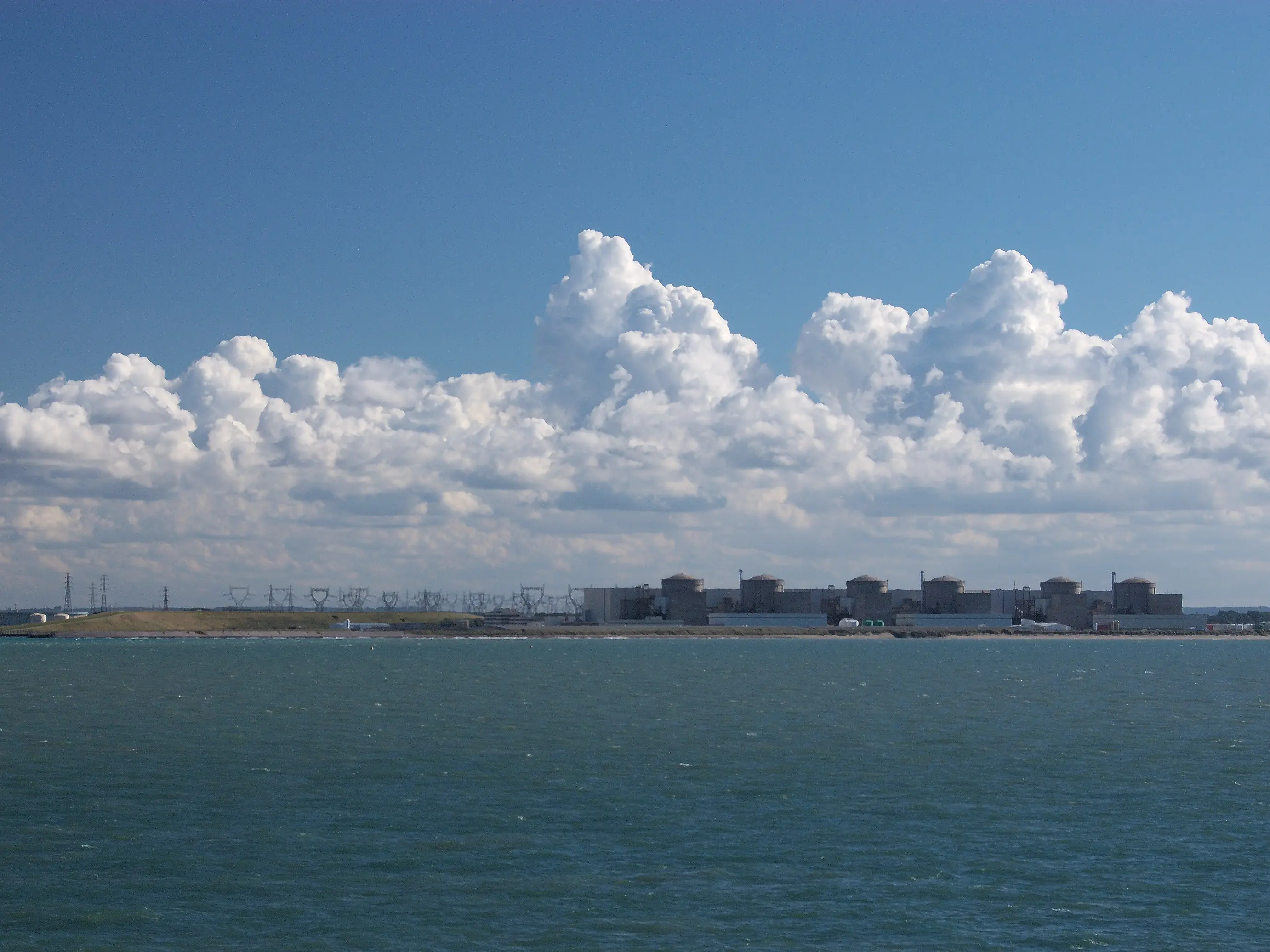
The six reactor buildings of the Gravelines nuclear power station on the French coast, seen from the sea

The evidence, plainly

Nuclear is the cleanest, safest, most reliable energy we already know how to build

One reactor powers a city of a million people with zero carbon emissions on a plot of land you could walk across in minutes. Day and night, rain or shine. Here are the numbers.

~93%capacity factor, highest of any source
≈12 gCO₂/kWh, lifecycle
0.03deaths per TWh
60–80+ yroperating life, fuel a tiny share of the cost

The six reactor blocks of Gravelines, France, seen from the sea — photo: Ralf Bächle, CC BY-SA 3.0. Full record on the credits page.

93% capacity factor≈12 g CO₂/kWh lifecycle0.03 deaths / TWh1 pellet = 1 tonne of coal60–80+ yr operating life1,000 MW on ~1 sq mile

01 · Climate

Carbon-free power that doesn't depend on the weather

Count the full lifecycle: mining, construction, operation, decommissioning. Nuclear plants emit about as much CO₂ as wind power, and roughly one-seventieth as much as coal.

≈12 g CO₂/kWhlifecycle emissions, on par with wind

Every kilowatt-hour has a footprint that starts before the plant opens and ends long after it closes. Count all of it, and nuclear sits at roughly 12 grams of CO₂ per kWh: comparable to wind, about a quarter of solar, and a tiny fraction of fossil fuels. That's the IPCC's median across global grids — it varies a little with how the electricity used in mining, enrichment, and construction is generated.

The difference is what happens when the sun sets or the wind dies. Renewables drop to zero; nuclear keeps delivering. France, where nuclear supplies roughly two-thirds of electricity, has among the lowest carbon footprints per kilowatt-hour in Europe, without relying on batteries to cover the gaps.

Climate targets need every zero-carbon tool. Wind and solar alone would force staggering amounts of storage and backup; nuclear, which runs whenever you need it, closes the gap they can't.

Source: IPCC, AR5 Working Group III, Annex III (lifecycle GHG emissions)
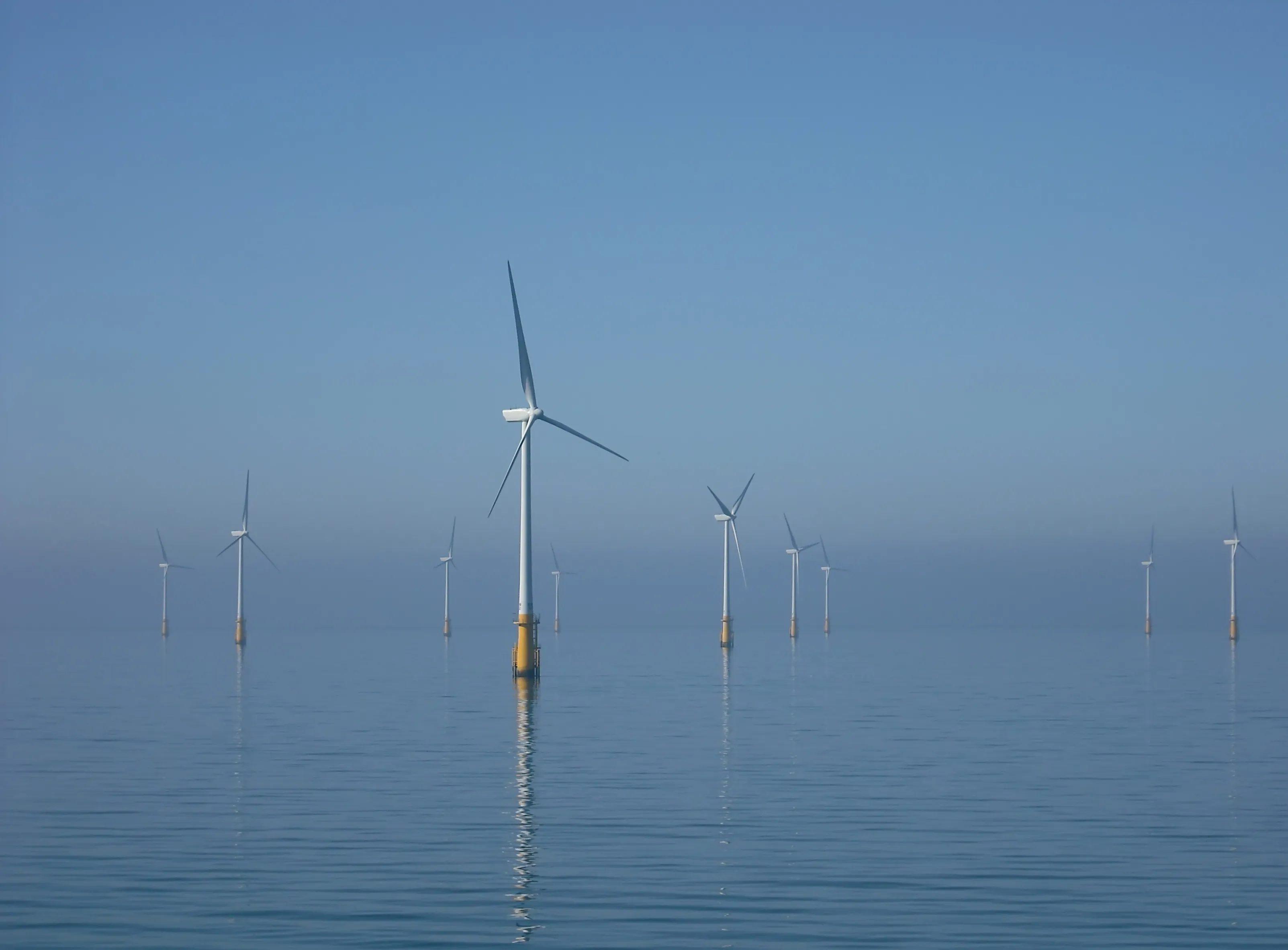
Wind is clean too. It only runs when the wind does.Photo: Muhammad Mahdi Karim, CC BY-SA 3.0

Lifecycle CO₂, grams per kWh

Coal
820 g
Gas
490 g
Solar
48 g
Wind
12 g
Nuclear
12 g

Amber marks nuclear. Wind and nuclear are so close to zero they barely register on this scale.

02 · Safety

The safest major energy source we have

Measure deaths per unit of electricity, including mining, transport, and the accidents everyone remembers. Nuclear lands at the very bottom of the table.

0.03 deaths / TWhcomparable to wind and solar; a tiny fraction of hydro and the fossil fuels

Per terawatt-hour of electricity, nuclear causes about 0.03 deaths. Lower than wind, comparable to solar, and roughly 800 times safer than coal. That count includes Chernobyl and Fukushima.

Why so safe? Nuclear plants are engineered with defense in depth: multiple redundant barriers, ceramic fuel, steel cladding, a thick concrete containment dome, each designed to contain a failure of the one before. Modern reactors add passive safety: they shut themselves down and cool themselves with gravity, with no operator action and no external power.

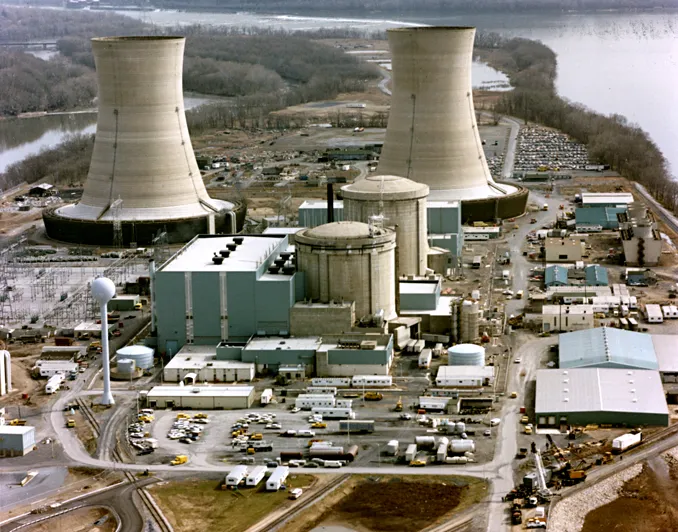
The famous accidents prove the point differently than most people assume. Chernobyl used a unique Soviet design with no containment building and ran an ill-conceived test; that combination cannot exist in a licensed Western plant. Fukushima was hit by a tsunami far beyond anything the plant was designed to withstand. The direct death toll from radiation was zero.

Source: Our World in Data,"What are the safest and cleanest sources of energy?" (Sovacool et al. 2016; Markandya and Wilkinson 2007)
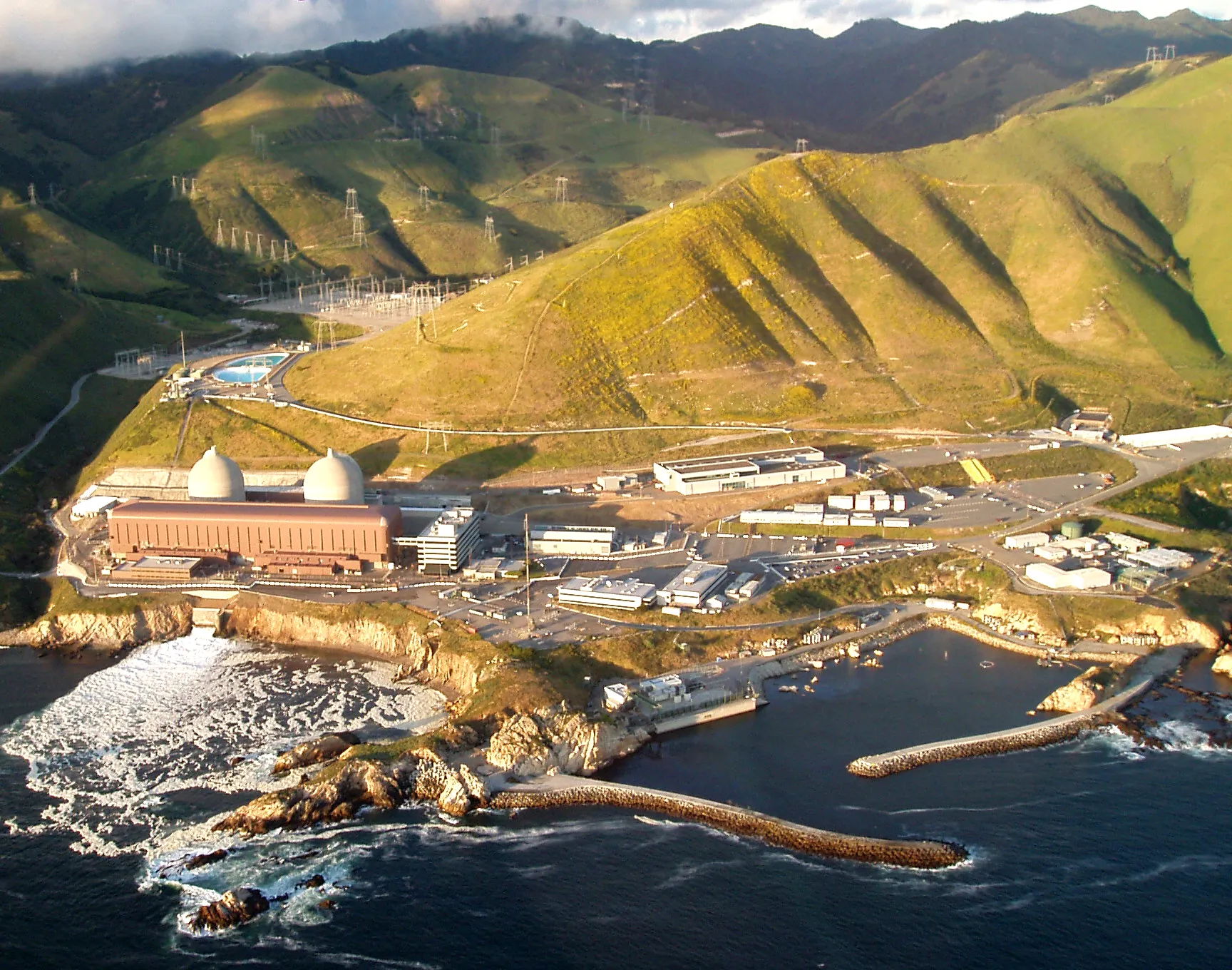
Diablo Canyon, California. Licensed to run safely for 80 years.Photo: marya (emdot), CC BY 2.0

Deaths per terawatt-hour

Coal
24.6
Oil
18.4
Biomass
4.6
Gas
2.8
Hydro
1.3
Wind
0.04
Nuclear
0.03

Amber marks nuclear. On this linear scale wind and nuclear barely register, and even hydro looks small next to the fossil fuels. Flip the switch for a log scale.

Log scale, 0.01 to 100 deaths per TWh, so the near-zero rows are no longer invisible. Amber marks nuclear.

03 · Density

A ridiculously small footprint for a massive amount of power

Uranium is millions of times more energy-dense than coal, and the land difference between nuclear and renewables is even bigger than the numbers suggest.

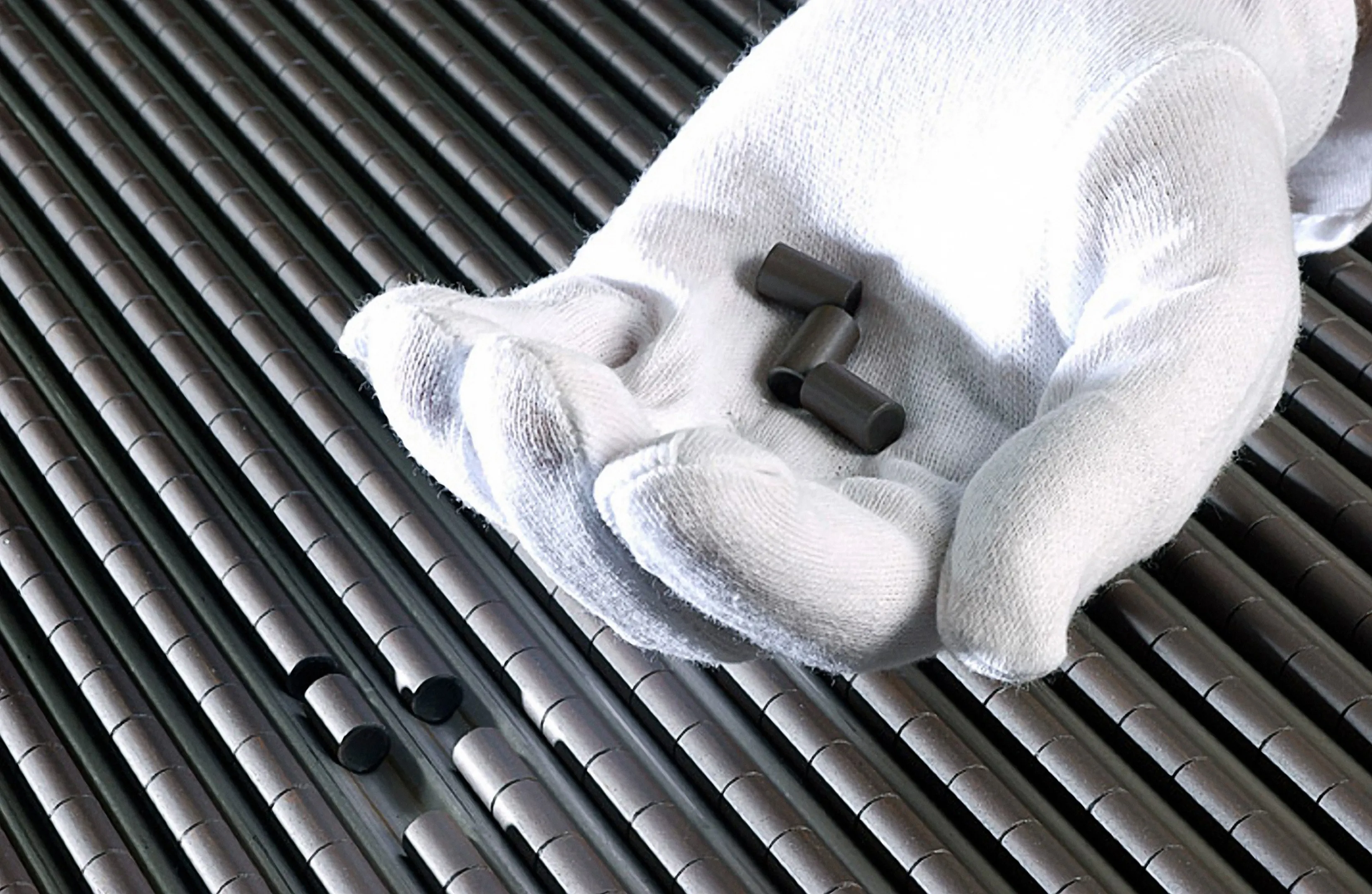
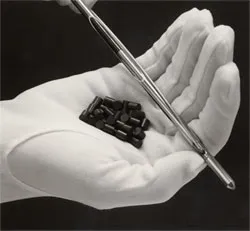
1 pellet = 1 tonne of coala 7-gram uranium fuel pellet, about the size of a gummy bear

Fission is staggeringly dense. A 1,000 MW reactor runs for a year on about 27 tonnes of uranium; a coal station of the same size burns more than 2.5 million tonnes of coal. A single fuel pellet the size of a gummy bear carries as much usable energy as a tonne of coal.

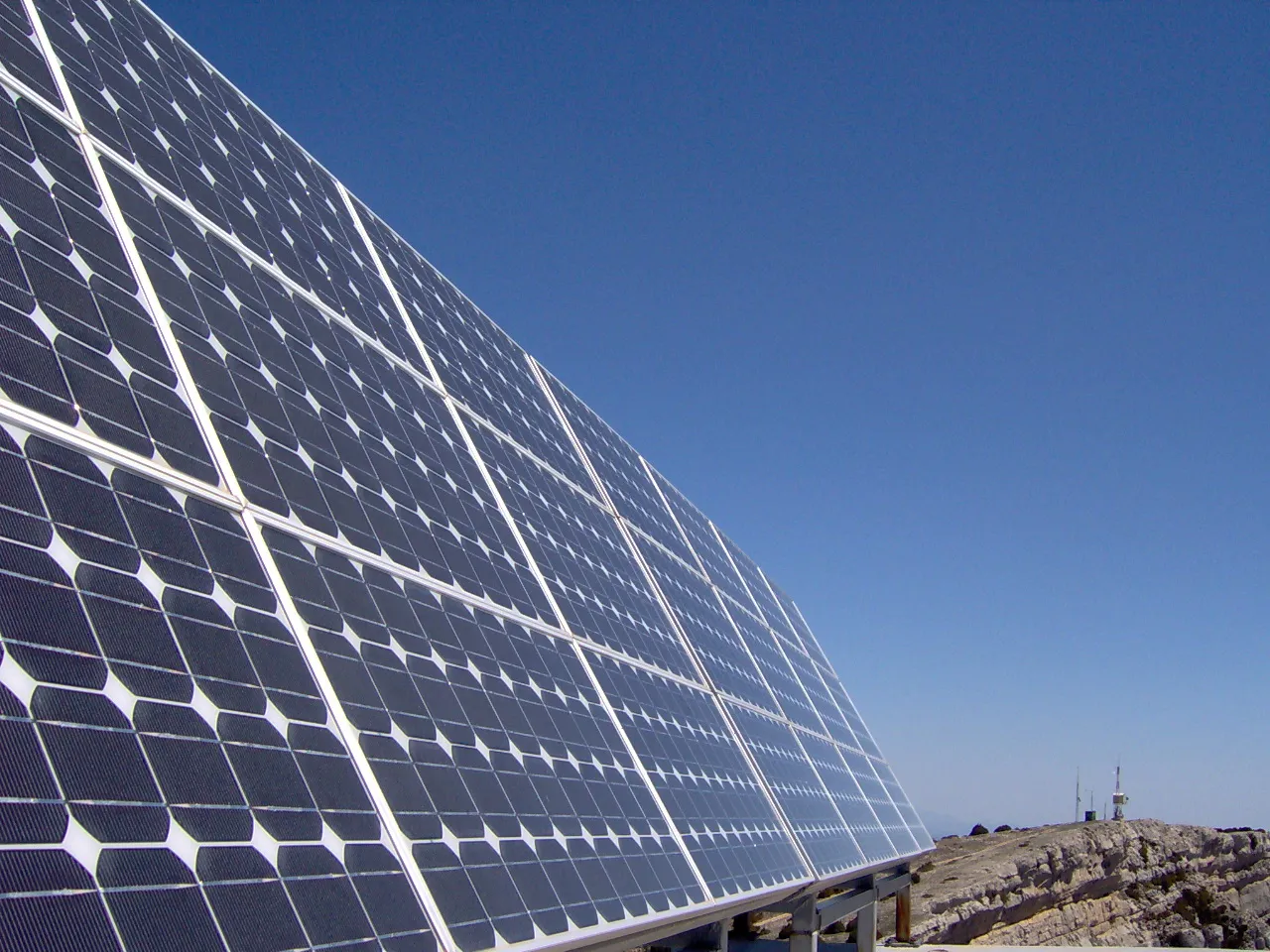
That concentration shows up on the map. For the same 1,000 megawatts of capacity, a nuclear plant uses about a square mile of land, while a wind farm needs roughly 360 and utility solar around 75.

This is land we don't have to pave, fence off, or fight over. Sparing it matters for nature as much as for politics: the least land-hungry clean energy is the one that disturbs the least habitat.

Sources: World Nuclear Association,"How is uranium made into nuclear fuel?"; Nuclear Energy Institute, "Land Needs for Wind, Solar Dwarf Nuclear Plant's Footprint"
Each of these pellets holds as much energy as a tonne of coal.Photo: U.S. NRC / Areva, CC BY 2.0

Land per 1,000 MW, sq miles

Wind
360
Solar
75
Nuclear
1.3

Amber marks nuclear. Its bar is 1.3 sq miles, barely visible at this scale, which is exactly the point.

The same 1,000 MW of solar needs roughly 75 square miles.Photo: Fernando Tomás, CC BY 2.0

04 · Reliability

Always on, whatever the weather

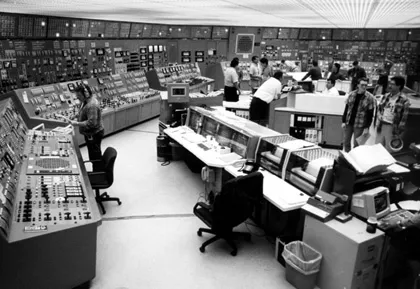
A reactor runs around the clock for 18 to 24 months between refuelings. In the United States, nuclear plants produce electricity more often than any other source.

~93% capacity factorshare of time nuclear plants actually produce power

Capacity factor measures how much of a plant's maximum output it delivers over a year. U.S. nuclear reactors sit near 93%, the highest of any source, fossil or clean.

Wind and solar are cheap but intermittent: a grid built on them needs backup for every still day and every cloudy night, plus storage that is still expensive at scale. Nuclear delivers power whenever you need it, which is why it pairs with renewables instead of competing with them.

A nuclear plant is also built to last. Original 40-year licenses are routinely extended to 80, and modern plants are designed for even longer service.

Source: U.S. Energy Information Administration, capacity factors 2023
Operators run the 1,000-megawatt plant around the clock; the reactor runs 18–24 months between refuelings.Photo: U.S. NRC (public domain)

Average capacity factor, 2023

Nuclear
93%
Gas
60%
Coal
42%
Wind
33%
Solar
23%

Amber marks nuclear: the difference between always on and when the weather cooperates.

05 · Waste

A tiny, contained problem, not the mountain people imagine

Nuclear waste is small in volume, solid, and stored safely on-site. Meanwhile the "clean" comparison people forget is sitting in coal ash ponds.

1 football field, ~10 yards deepall used fuel from 60+ years of U.S. nuclear power

Every reactor's spent fuel from six decades of U.S. commercial nuclear power would fit in a single football field stacked about ten yards deep. It is solid ceramic, sealed in steel, and sits in concrete casks monitored on-site. It has not harmed a single member of the public.

Compare that with coal: a single large coal plant produces around 100,000 tonnes of ash every year, and coal ash released into the environment carries around 100 times more radiation than a nuclear plant making the same electricity, with most of it simply dumped or ponded. Nuclear waste is the one waste stream that is fully contained and paid for.

Geological disposal, burying it deep in stable rock as Finland is now doing at Onkalo, is a solved engineering problem that politics, not physics, has delayed.

Sources: U.S. NRC, "Radioactive Waste"; NEI, "Safely Managing Used Nuclear Fuel"; Scientific American, "Coal Ash Is More Radioactive than Nuclear Waste" (2007); Posiva (Finland)
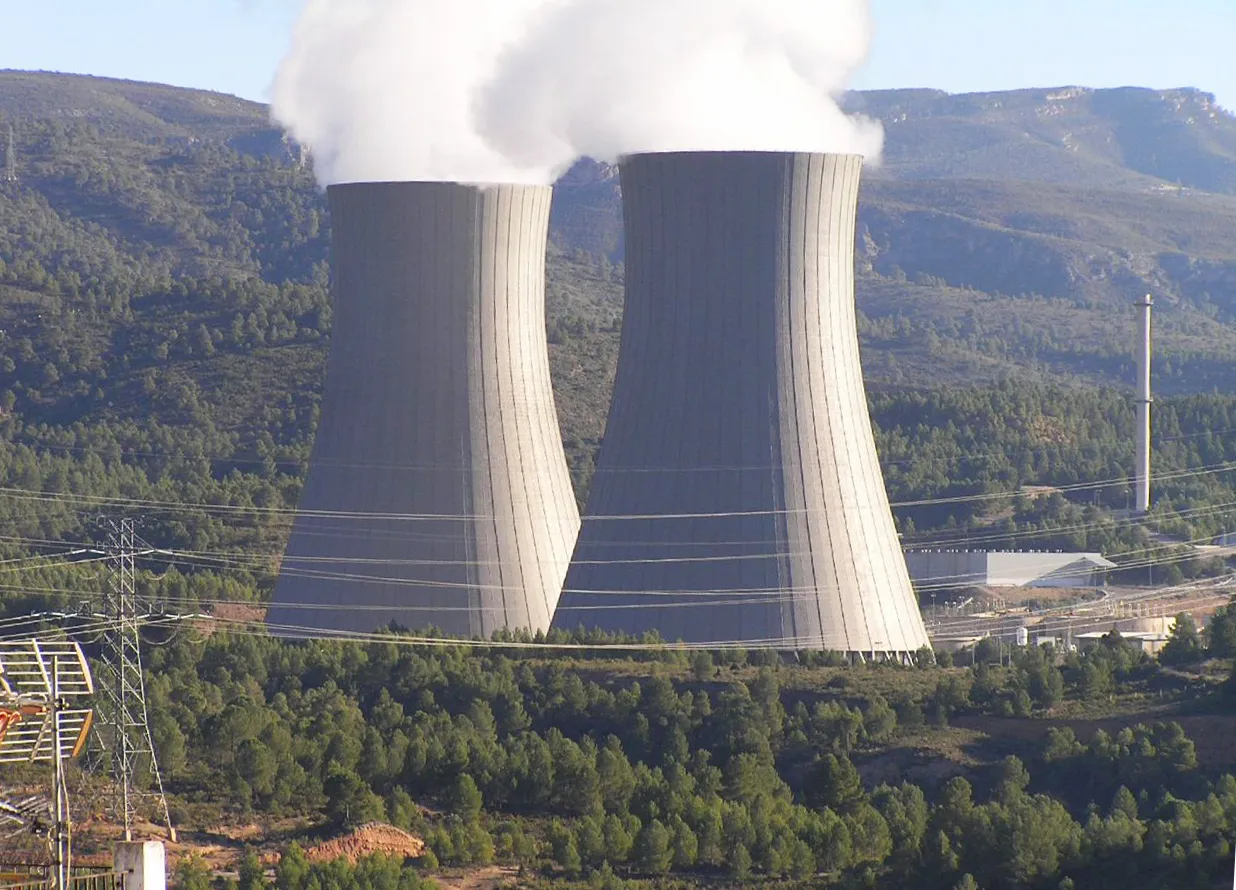
The iconic towers emit only water vapor. The plant's waste is solid, contained, and measured in tonnes per year, not millions.Photo: Roberto Uderio, CC BY-SA 3.0
The entire fuel cycle, in one hand.Photo: U.S. DOE (public domain)

06 · Cost

Expensive to start, cheap to run, built to last

The honest picture: reactors are capital-heavy projects. The payoff is decades of some of the cheapest, most stable electricity on the grid.

60–80+ yearsoperating life, with fuel a tiny share of running costs

Almost all of a reactor's cost is paid before it opens. After that, uranium is a small fraction of the operating budget, maintenance is modest, and the plant runs for 60 to 80 years or more, far longer than any wind turbine or solar panel.

Existing U.S. nuclear plants are routinely among the cheapest electricity on their grids, which is why utilities keep extending their licenses rather than replacing them. The cost problem is not the technology's physics. It's that nearly every recent build has been a one-off design, built one at a time.

Standardize the design, build in series, and the numbers change dramatically: France built 56 reactors in about 15 years, getting faster and cheaper with each one, and South Korea and China now build reactors on time and on budget the same way.

Sources: IEA, "Projected Costs of Generating Electricity"; World Nuclear Association, "Economics of Nuclear Power"

Where the money goes (illustrative)

Build
~60%
O&M
~20%
Fuel
~10%

Amber marks the build cost, paid up front. Then decades of cheap, stable power. The opposite shape of gas, where fuel bills keep coming every year.

07 · The hard part

What's actually wrong with nuclear, in good faith

No argument for nuclear is honest without naming what's hard. These are the real objections, and they deserve real answers.

  • Cost and schedule overruns are real. Vogtle in Georgia finished years late at roughly double its budget; Hinkley Point C and Olkiluoto tell the same story. The lesson isn't "nuclear can't work." It's that custom, one-off projects are the worst possible way to build them.
  • Policy whiplash kills projects. Plants canceled mid-construction after political reversals (like the U.S. in the 1980s) mean every project starts from scratch, and the cost of regulatory stop-start is baked into every estimate.
  • Fear is a cost too. Public perception, however disproportionate to the data, lengthens permitting and siting timelines. That's a political problem with an engineering solution: new designs, honest communication, and demonstrated results.
  • Waste siting is stuck. The technical path, deep geological disposal, is solved. The political path, choosing a site, is not. Finland proved it can be done; others are still deciding.

Every one of these is a fixable systems problem. The alternatives, staying on fossil fuels or building the required wind, solar, storage, and transmission instead, carry costs that are equally real and far less discussed.

Three Mile Island, 1979. The accident that scared a generation. Zero deaths, and the reactor's containment worked as designed.Photo: U.S. DOE (public domain)

08 · Myths vs Facts

What's actually true, myth by myth

Every claim has a number, a study, or a regulator behind it. The facts link to their sources.

Myth

A meltdown means the reactor exploded like a nuclear bomb.

Fact

A commercial reactor cannot detonate like an atomic bomb: the fuel is too low-enriched to sustain the runaway chain reaction a weapon needs. Meltdowns are real and serious, but they are an overheating-and-containment problem, never a nuclear explosion.

Source: Congressional Research Service, The Japanese Nuclear Incident: Technical Aspects

Myth

Used fuel will poison the planet for a million years.

Fact

All the used fuel the U.S. has ever produced would fit on a football field stacked about ten yards deep. It sits in cooled pools or sealed steel-and-concrete casks, monitored and contained — the one waste stream that is fully paid for and fully accounted for.

Source: U.S. NRC, Radioactive Waste

Myth

Chernobyl and Fukushima proved nuclear power is unsafe.

Fact

In more than 20,000 reactor-years of commercial operation, those are the only two major accidents. Chernobyl was a unique design with no containment, running an ill-conceived test; Fukushima was hit by a tsunami far beyond its design basis. At Fukushima, no one died from radiation.

Source: World Nuclear Association, Safety of Nuclear Power Reactors

Myth

Wind and solar alone are enough, so nuclear is obsolete.

Fact

The sun sets and the wind stops. Every serious decarbonization pathway keeps nuclear in the mix, because it runs around the clock and cuts the enormous storage and backup that weather-dependent power otherwise demands.

Source: International Energy Agency, Nuclear Power and Secure Energy Transitions

Myth

Nuclear is too expensive and takes too long to matter.

Fact

A running reactor is among the cheapest electricity there is — fuel is a tiny share of the cost. The expensive part is first-of-a-kind construction and financing, and countries that build in series, like France and South Korea, brought those costs down.

Source: International Energy Agency, Projected Costs of Generating Electricity

Myth

Civilian nuclear programs are how countries build the bomb.

Fact

IAEA safeguards exist precisely to keep the two apart: inspectors track nuclear material and equipment. Most weapons states built their arsenals before or outside civilian power — which is why almost every country with nuclear electricity has no weapons.

Source: World Nuclear Association, Safeguards to Prevent Nuclear Proliferation

09 · Myth-busting

The objections, answered

Short answers to the questions that come up every time.

Isn't nuclear dangerous?

By the only measure that matters, deaths per unit of electricity, nuclear is comparable to wind and solar, and a fraction of hydro, gas, oil, and coal. The fear is understandable; the data says otherwise.

What about Chernobyl?

Chernobyl was a Soviet-era reactor with no containment building, a dangerously unstable design, and a crew running an unauthorized experiment. That combination is impossible in a modern licensed plant, and the international community spent decades fixing even the lessons of it. It is not representative of nuclear technology; it is the cautionary tale of why safety culture and containment exist.

What about Fukushima?

A tsunami far larger than anything the plant was designed to withstand knocked out backup power. Yet the direct death toll from radiation was zero. The evacuations themselves caused most of the harm. Reactors shut down safely; the lesson was to harden backup systems further, which the industry has done.

What about the waste?

All of it is small in volume, solid, and safely contained on-site, nothing like the unfiltered byproducts of coal. Deep geological disposal is a solved engineering problem (Finland is doing it). The delay is political, not technical.

Can't renewables do it alone?

Wind and solar are essential, and intermittent. A grid running on them needs enormous storage, backup capacity, and transmission, which still costs more than power that's there whenever you need it. Nuclear and renewables are complements, not rivals: France pairs roughly two-thirds nuclear with growing renewables and has some of Europe's lowest-carbon electricity.

Doesn't it take too long and cost too much?

Today's megaprojects are slow because each is a one-off. France built 56 reactors in about 15 years by standardizing one design; South Korea and China do the same now. Small modular reactors aim to move construction to factories. The first build is always the hardest. The fix is building more, not giving up.

Doesn't it help nuclear weapons?

Civilian power reactors run on lightly enriched fuel that cannot be used in weapons, and international inspectors monitor them around the clock. The countries that built weapons did it in dedicated military programs, not power plants. Stopping the spread of nuclear weapons is a treaty problem, not an argument against electricity.

Beyond the article

Why do so many Filipinos distrust nuclear power?

Bataan's scar, the Ring of Fire, and the question that matters most: institutions. A sourced deep dive, claim by claim.

Read the deep dive

Now it's your turn

The evidence is on the page. Check the sources, then decide.

Every number here links to its primary source. If you disagree with the case, argue with the data.

Sources & further reading

Every figure links to a primary source: regulators, agencies, and international bodies (EIA, IPCC, IAEA, UNSCEAR) alongside the nuclear industry's own data (WNA, NEI) and peer-reviewed studies. Where sources disagree, this page says so. Data has a vintage — each source below and every chart states the year it refers to.

Image credits

All photos are freely licensed for reuse with attribution. Full details, file pages, and license links: photo credits page.

  • Hero: Gravelines NPP · Ralf Bächle, CC BY-SA 3.0
  • Wind farm: Barrow Offshore Wind · Muhammad Mahdi Karim, CC BY-SA 3.0
  • Fuel pellets: U.S. NRC / Areva, CC BY 2.0
  • Solar field: Fernando Tomás, CC BY 2.0
  • Control room: U.S. NRC, public domain
  • Diablo Canyon: marya (emdot), CC BY 2.0
  • Cooling towers: Cofrentes, Spain · Roberto Uderio, CC BY-SA 3.0
  • Pellet in hand: U.S. DOE, public domain
  • Three Mile Island: U.S. DOE, public domain
Every figure links to its source. Figures reflect the latest available data as of August 2026; data changes, so check the links.