The Philippines, plainly
Nuclear in the Philippines
"Why don't Filipinos like nuclear power?" is really three questions: what happened before, what's true now, and whether the institutions could ever run a plant safely. This page answers each one — with sources for every claim.
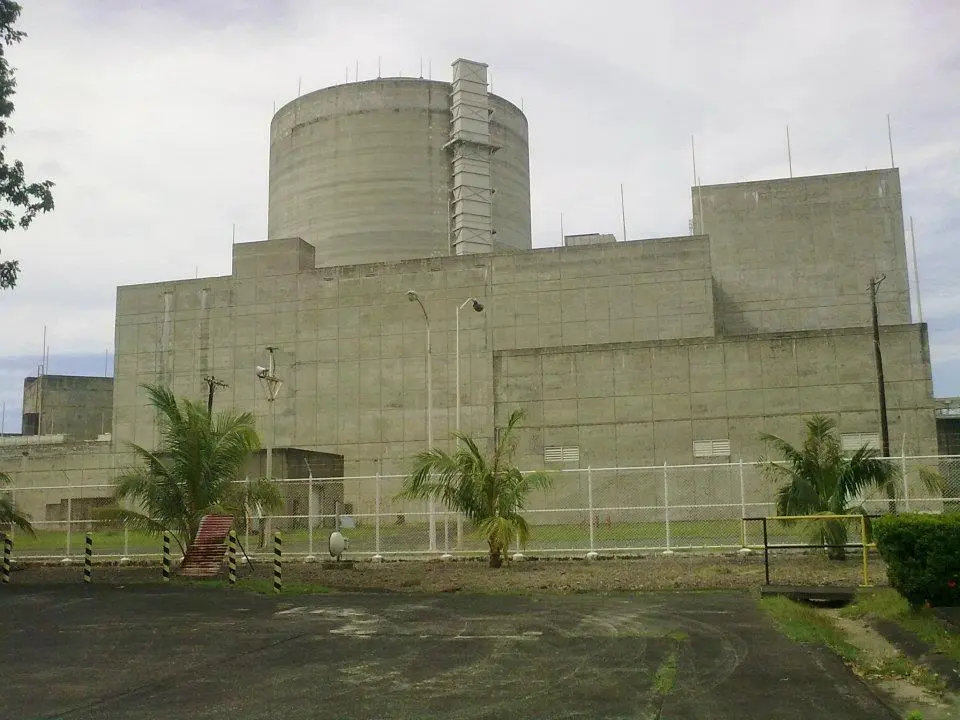
The mothballed Bataan Nuclear Power Plant, Morong, 2011 — photo: Jiru27, CC BY-SA 3.0. Full record on the credits page.
01 · The question behind the question
Bataan is the scar — and it's worse than "corruption and debt"
The Bataan Nuclear Power Plant was built between 1976 and 1984 under Ferdinand Marcos: a 620 MW Westinghouse reactor that cost roughly US$2.3 billion (Wikipedia) and was never fueled or operated (World Nuclear Association).
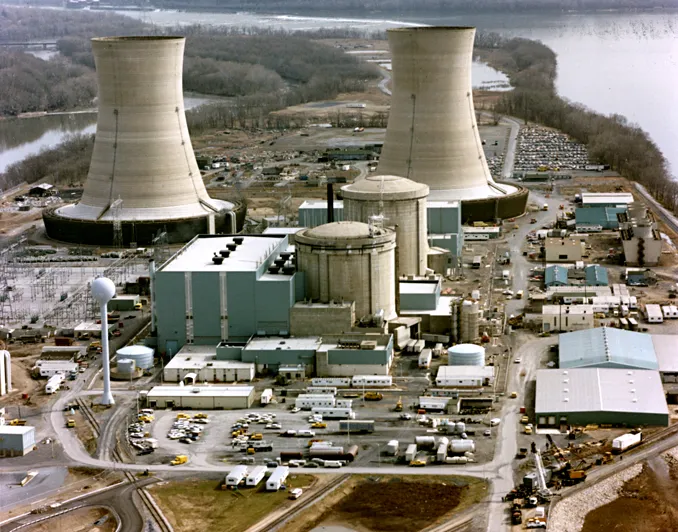
Construction was paused in 1979 after Three Mile Island, and a presidential review commission — the Puno Commission, created by Executive Order 539 — found more than 4,000 defects in what had been built (Stanford;IAEA Country Profile).
After EDSA, the political decision was to mothball it — but the debt stayed on the government's books. For most Filipinos, "nuclear power" is this one building.
02 · The site's geology
The strongest objection isn't fear — it's the ground under the plant
BNPP sits about eight kilometers from Mount Natib, a potentially active volcano, and geological studies say the plant likely stands on or near active faulting, with pyroclastic deposits and lahars underlying the site (Solidum, IAEA; Philippine Daily Inquirer, 2018).
So "what if an earthquake hits it?" is not paranoia about nuclear in general — it's a documented objection to that site. It argues for better site selection, not for banning the technology. But it is a legitimate, peer-reviewed reason people distrust any Philippine nuclear project.
What the site faces
- Mount Natib — ~8 km away, a potentially active volcano
- Active faulting — the plant likely stands on or near it
- Pyroclastic deposits & lahars — volcanic debris underlying the site
03 · Chernobyl and Fukushima
The memories are real — the numbers are smaller than the pictures
At Chernobyl, of 600 workers on site during the accident, 134 developed acute radiation sickness and 28 died of it; 19 more survivors had died by 2006 (UNSCEAR, Our World in Data).
At Fukushima, no deaths or radiation sickness have been documented, and the UN found no adverse health effects among residents directly attributable to radiation (UNSCEAR 2020/2021, World Nuclear Association).
The honest caveat: more than 100,000 people were evacuated, and displacement itself carried real health and social costs (Bulletin of the Atomic Scientists). Fear is a rational response to the pictures; the statistics are what a real debate would weigh.
Two accidents, by the numbers
- Chernobyl — 134 sickened with acute radiation sickness; 28 died of it
- Fukushima — 0 deaths or radiation sickness documented
The honest caveat: 100,000+ people were evacuated — displacement carried real health and social costs.
04 · The constitution
The 1987 Constitution never banned nuclear energy
Article II, Section 8 of the 1987 Constitution commits the Philippines to "freedom from nuclear weapons" — a weapons policy, not an energy ban (Official Gazette).
Opposition to BNPP was organized and political (the Nuclear Free Philippines Coalition, founded 1981), but nothing in Philippine law prohibited civilian nuclear power. The obstacle was history, trust, and economics — not the constitution.
What Article II, Section 8 actually says
"The State shall pursue a policy of freedom from nuclear weapons in its territory."— 1987 Constitution, Republic of the Philippines
05 · Waste
Waste is a management problem, not a volume problem
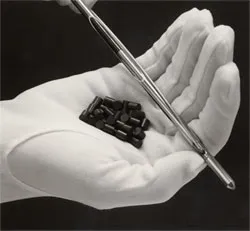
Nuclear waste is dangerous precisely because it is concentrated: a plant's spent fuel fits in a small volume, stored in engineered casks, with the hard part being time and institutions (U.S. NRC).
Fossil waste is the opposite — massive and dispersed into the air as CO₂, particulates, and sulfur compounds. Neither is a zero-impact energy source.
06 · Risk perception
Rare but catastrophic feels more dangerous than chronic but certain
People weigh catastrophic-but-rare outcomes more heavily than frequent-but-boring ones — which is why "0.03 deaths per TWh for nuclear" feels abstract next to images of contaminated ground, even though coal sits around 24 deaths per TWh (Our World in Data).
That asymmetry is psychology, not misinformation.
Deaths per terawatt-hour
Amber marks nuclear. The rare catastrophe feels enormous; the chronic toll doesn't — which is the whole point of this section.
07 · The policy has already turned
The debate the article said "the Philippines needs" is already happening
In February 2022 the president signed an executive order putting nuclear into the energy mix (Reuters).
In November 2023 the Philippines signed the U.S. 123 civil-nuclear cooperation agreement, in force since July 2024 (U.S. Department of State).
And the IAEA has run two Integrated Nuclear Infrastructure Review missions — the agency's official readiness check — most recently in December 2024 (IAEA). The government targets nuclear in the mix by 2032.
The policy shift
- 2022 — executive order puts nuclear in the energy mix
- 2023 — U.S.–Philippines 123 agreement signed
- 2024 — agreement in force; second IAEA readiness review
- 2032 — target year for nuclear in the mix
08 · The real question
Institutions, not reactors
A modern reactor can have extraordinary safety engineering. But corrupt procurement, weak regulation, political interference, or incompetent operators create an entirely different risk. Conversely, countries with strong regulation and independent oversight run nuclear safely.
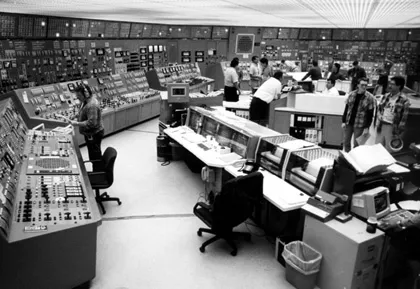
That is precisely why the official framework — the IAEA Milestones approach — is about institutions: regulation, operators, waste management, security, and transparent reporting, not reactor sales. Trust in institutions may be the biggest nuclear-energy problem the Philippines has — not the reactor itself.
None of this means the Philippines must build a plant. It means the honest question — the one a national conversation should actually debate — is whether the country can run one safely for sixty years. That's a question about governance, and it deserves evidence, not slogans.
Sources & further reading
- Wikipedia — Bataan Nuclear Power Plant
- World Nuclear Association — Nuclear Power in the Philippines
- Stanford — Bataan Philippine Reactor: 30 Years Unfueled
- IAEA — Philippines Country Nuclear Power Profile (2018)
- Solidum — Earthquake and volcanic risks: issues for the BNPP (IAEA)
- Philippine Daily Inquirer — Safety issues hound BNPP revival plan
- UNSCEAR — The Chornobyl Accident
- UNSCEAR — 2020/2021 Fukushima Report FAQ
- Our World in Data — What was the death toll from Chernobyl and Fukushima?
- Bulletin of the Atomic Scientists — Counting the dead at Fukushima
- World Nuclear Association — Fukushima Daiichi Accident
- Official Gazette — 1987 Constitution of the Philippines
- Reuters — Duterte approves inclusion of nuclear power in the energy mix
- U.S. Department of State — U.S.–Philippines Civil Nuclear Cooperation Agreement enters into force
- IAEA — Reviews progress of the Philippines' nuclear infrastructure development
- Our World in Data — Death rates from energy production per TWh
Image credits
All photos are freely licensed for reuse with attribution. Full details, file pages, and license links: photo credits page.
- Hero: Bataan NPP · Jiru27, CC BY-SA 3.0
- Three Mile Island: U.S. DOE, public domain
- Fuel pellet in hand: U.S. DOE, public domain
- Control room: U.S. NRC, public domain